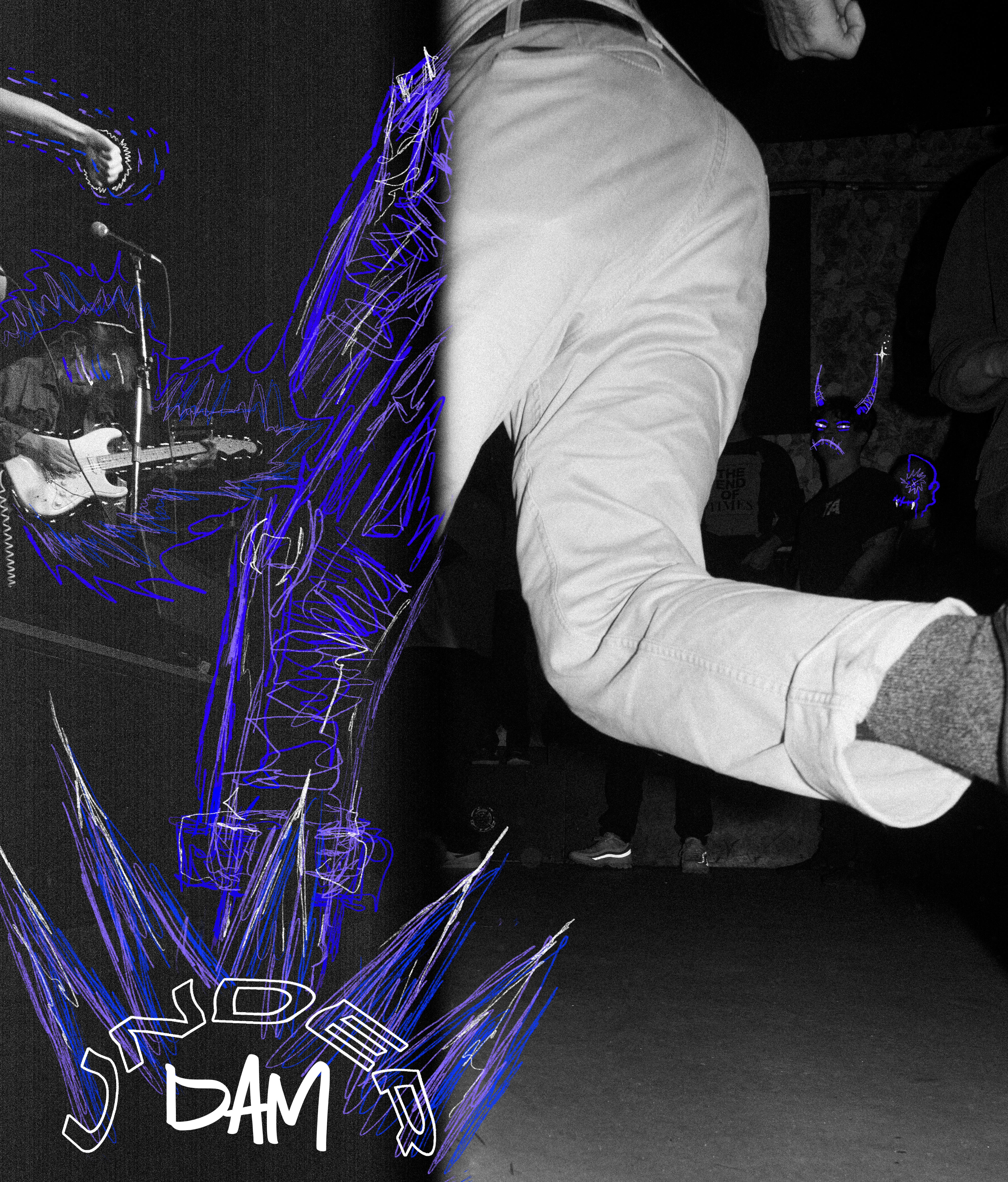
UNDERDAM
Magazine
Designed by Hiba Ghilassi & Sander Troost

The Untamed Fire In Babylon
Written by Nicolas Aanonsen
Roots are found in the creeks and cracks of this city. Be it in a record store, hanging from a wall, on the radio, or spoken outside a concert hall, if you haven’t felt it yet, you must be ducking the Amsterdam core. This city is not only made up of soul sellers giving up their freedom to the Babylon merchant. Despite governmental efforts strangling squatting, the laws have not torn down the rundown walls or silenced the honest songs. The history is still being written. We want to explore these roots as they continue to grow.
THE FLAME IS STILL ALIVE
an old Paradise bird told me during anthropological research on subcultures last year. A fire that remains untamed by the com-modification it is surrounded by. It was from multiple conversations with old-timers and newcom-ers in the creative sphere, the idea to create a platform began to take shape. To see so many people believe in this project early on proved that not only is the flame still alive, it’s red hot. Each issue of Underdam Magazine will voice different people and themes that deserve amplification. With the help of your words on these pages, let us spread this fire together.
ISSUE#2
To continue in Underdam fashion, this issue turns to a subculture in Amsterdam which shares the sentimental root of freedom. From patches on clothes, to bar walls and banners, the punk movement continues to stitch itself into the cultural fabric of this city. The first thing I picked up on when talking to punkers about punk, is that everyone has their own story of getting into it. Whether it be their mom putting them on, or a government turning them off, there is no one reason to mosh. The music genre found its way into my playlist through, what one might find, an unexpected route. After a quarter of a lifetime with the sweet sounds of roots reggae, a Spe-cials vinyl fell into my hands, and tickled my ears. From ska, an irresistible world opened. Bad Brains, Noir Desir, Patti Smith all told the same story I had heard my whole youth. A tale of dystopia and rebellion. Focusing the second issue on this subculture, we look forward to learning about the different interpretations and relations people in Amsterdam have to punk. Nothing more conclusive is to be acquired from these pages, but a holistic picture of the contemporary scene, colored in by old paradise punks.
Where They Were & Where We Going
Article by Matei Lacatus & Nicolas Aanonsen
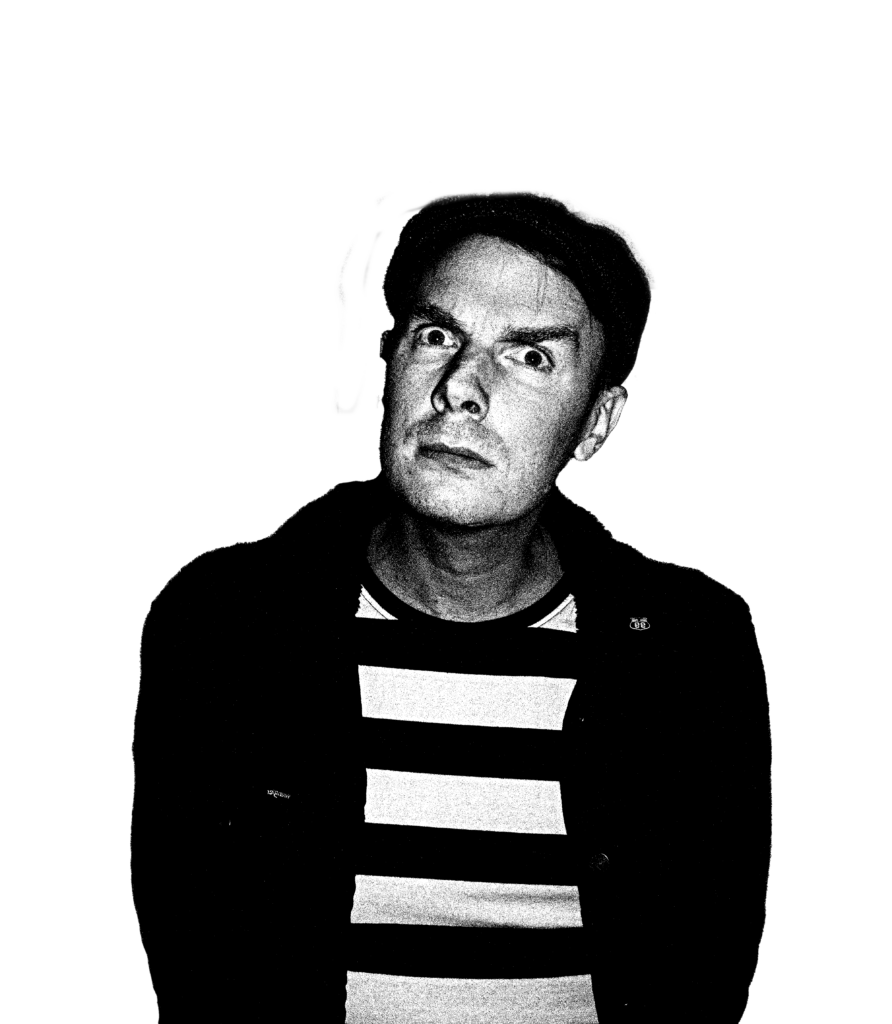
Meet Gilian, the punk maven and co-founder of Wap Shoo Wap Records! His journey into the rebellious world of punk kicked off in the bland Amsterdam suburbs, ignited by two Russian brothers asking the game-changing question, “Are you into punk?” Fast forward to ‘95, Gilian dives headfirst into the hardcore punk scene, shaped by the DIY ethos and the vibrant chaos of squats scattered across the city. Picture squats as the lifeblood of Amsterdam’s underground, where every corner held a promise of raw, unfiltered music. From Rozengracht to Rokin, squats were the breeding grounds for punk rebellion. Gilian takes you on a journey through the decline of squats, the impact of gentrification, and rise of Wap Shoo Wap Records.
How did you get into punk?
When I was about 14 years old, living in the suburb of Amsterdam in Amstelveen, which was a typical super boring white suburb, nothing was happening. I was the outcast, trying to get a band together, you know. But there were not really a lot of like-minded people there. Then two Russian guys came in, two brothers that just moved here from Moscow. They asked me: Are you into punk? I said yes. They were like “We’re into hardcore punk”, but what the fuck is hardcore punk? They played me some hardcore tracks and I really liked it. They mentioned then that they play in a band. They were 14 years old. I thought bands only played at MTV, or you’re playing at the school band. I didn’t know there was a middle ground. They were playing that Friday at Occii, which is a legalized squat venue that still exists today. The bands played straight edge hardcore! No alcohol. No drugs, vega§n, straight edge. We thought, oh, this is punk? Everybody was dressed in the skate punk style of the nineties and it blew us away. It was hardcore punk, so it was even faster. Moshpits were happening, crowd surfing.
And then I saw the shy bass player, my friend, jumping from the stage. Stage diving while playing bass, and crowd-surfing. I thought well, if he can do it, then maybe I can do that too, you know? So that really opened my world and I got into the hardcore punk scene, which was very tight and quite big back then for Amsterdam status, for Dutch standards. There were a lot of bands, young bands, people doing zines as well, very active, organizing their own shows and they were usually only 15 / 16 years old. Some friends asked me to play in a band in the late nineties, that’s how it started. From then on I started playing in my own bands.
How was the punk scene connected to squatting back then?
For all the shows, the bands practiced in squats. There were still so many squats in the nineties, a new one popping around at every corner. If you went through Rozengracht, it was like two squats there. When you went to Overtoom, there were maybe three squats over there. Sometimes it didn’t last long, but there was always a show happening, and it was cool. Also at Rokin, Damrak you name it. The biggest one was called Kalenderpanden back in the day.
How was it experiencing the punk scene in other places?
It was perfect because, most of the time, it’s like-minded people. The people who are putting on the shows usually like the same music and have the same kind of cultural interests. I experienced the underground scene everywhere I we nt; Europe, South America, Mexico, everywhere. It was better than in Amsterdam at that time. You got more people at the shows, more bands, local bands. That really made me not jealous, but say, ‘Fuck man, we need this back in Amsterdam as well’. If they can do it, why can’t we do it? I took that inspiration with me to later start the record label, Wap Shoo Wap Records.
That’s where most shows were happening. I went there all the time; it was cheap, drinks were cheap, we didn’t have any money. I saw a lot of bands, mostly hardcore punk, but also punk. It was underground, in every sense of the word. The DIY (do it yourself) mentality was super important. Most of the time we didn’t have money to go to big venues to see big bands, so sometimes we had to do our own stuff. That was the best way. Every weekend there were a lot of shows happening around town.
Do you feel like this was a peak in the scene?
This went into at least the early 2000s. I think the squatting ban, in 2010, was the reason things slowed down. There were less bands, no more places to practice and the number of shows immediately went down. I saw the scene getting older, more gray. The bands were older, the audience was getting older, however, we were still one of the younger ones back then. We noticed that the scene was getting a bit boring up until covid happened. I think the squatting ban, where local governments wouldn’t allow squats anymore, made it difficult to have a lively punk scene.
Do you feel like that impacted broader society as well?
Yeah, it happened almost simultaneously with gentrification. The reason they put the squatting ban there was to get to sell more expensive fucking apartments for rich fucking people.
How did you experience this decline?
Personally, around that time, I started playing in another band, a garage punk band called The Anomalys. We were on a record label in the USA, and I toured a lot. We were not big or something, but the underground scene was very well connected. I was touring for like 2, or sometimes 3 months out of the year, in the USA, South America or Mexico, and all over Europe. So I wasn’t in Amsterdam a lot during those years.
AT NIGHT THE SYSTEM CRACKS
Written by Leo Smith
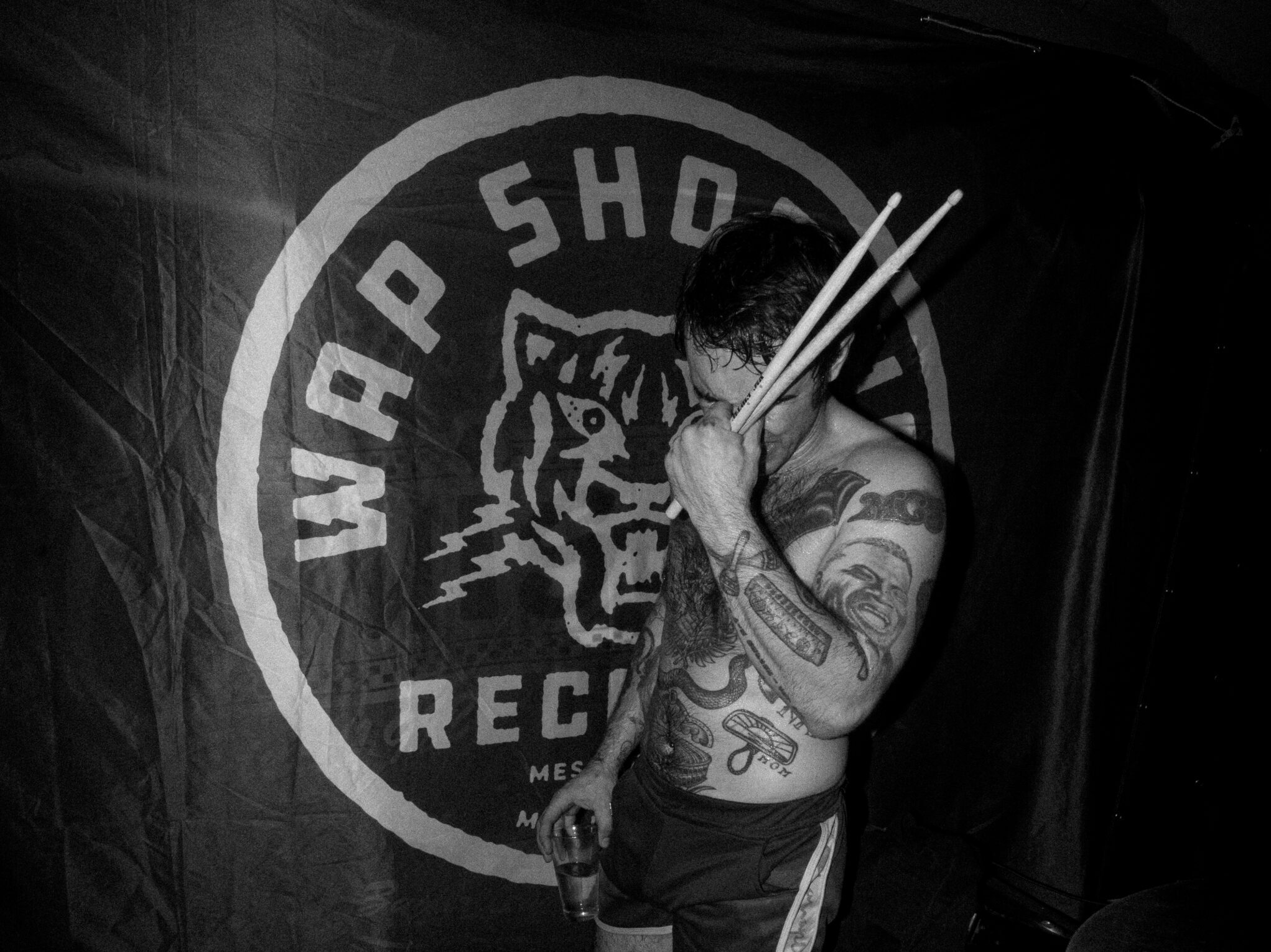
Photos by Vali Stan
The venue, a theatre for anti establishmentarianism, occupies the bellybutton of the underbelly of Amsterdam. A place where the air hangs heavy with rebellion, casting a shadow over the inevitable dominance of the monoculture of the mainstream. It is a space in which people can mosh on the fringes of society, where the fuck you mentality runs rampant.
The cramped space vibrates with anticipation for what is to be blasted through the speakers. As the minutes approach 8 o’clock, punkers come flooding in and the scent of rebellion and buzz of cheap beer permeates the room. The stage is dimly lit, inhabited only by the drum kit, the haphazardly stacked amps and the snaking cables. Though the stage is vacant, the punk persists, through the generations of posters scattered on the walls and the scars of past punk performances.
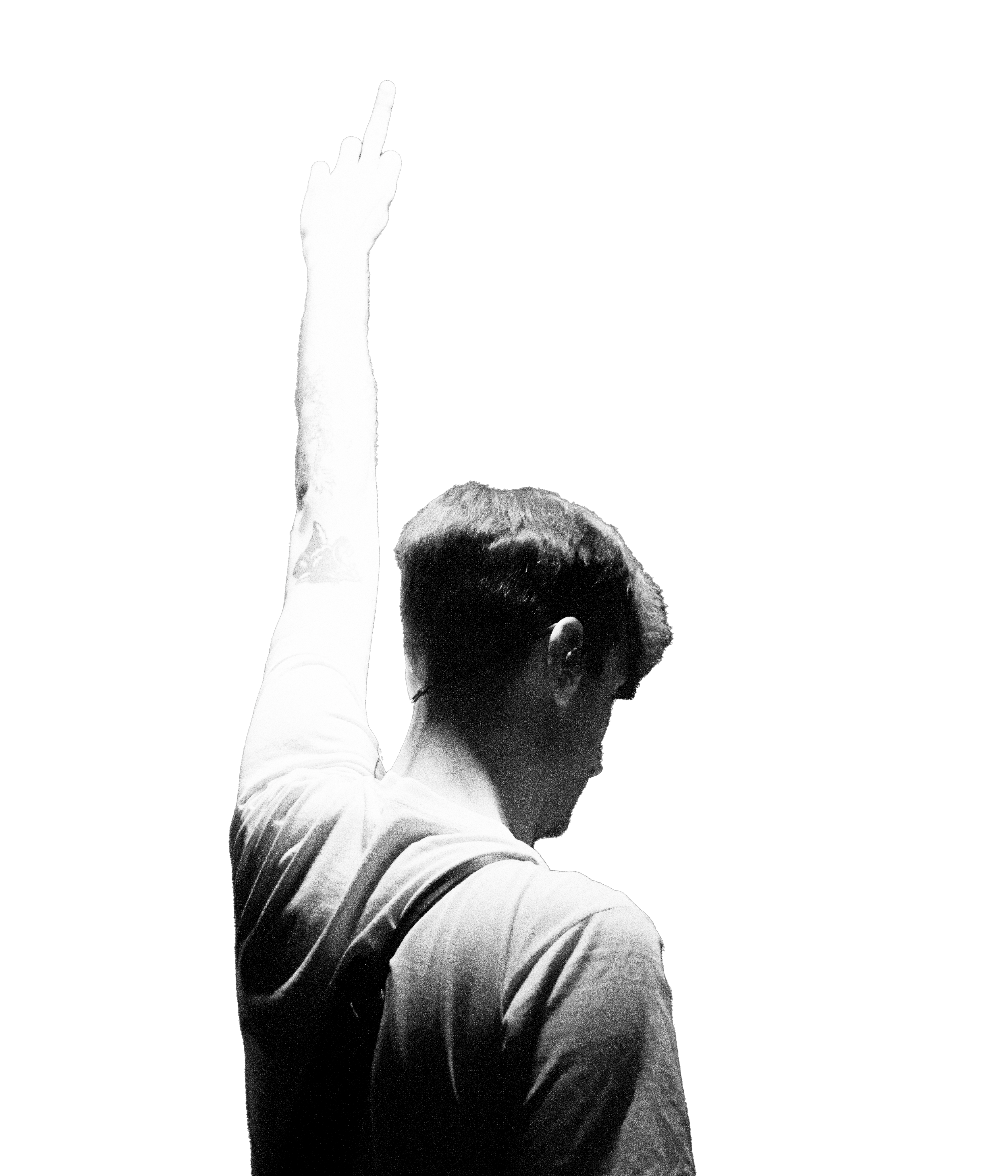

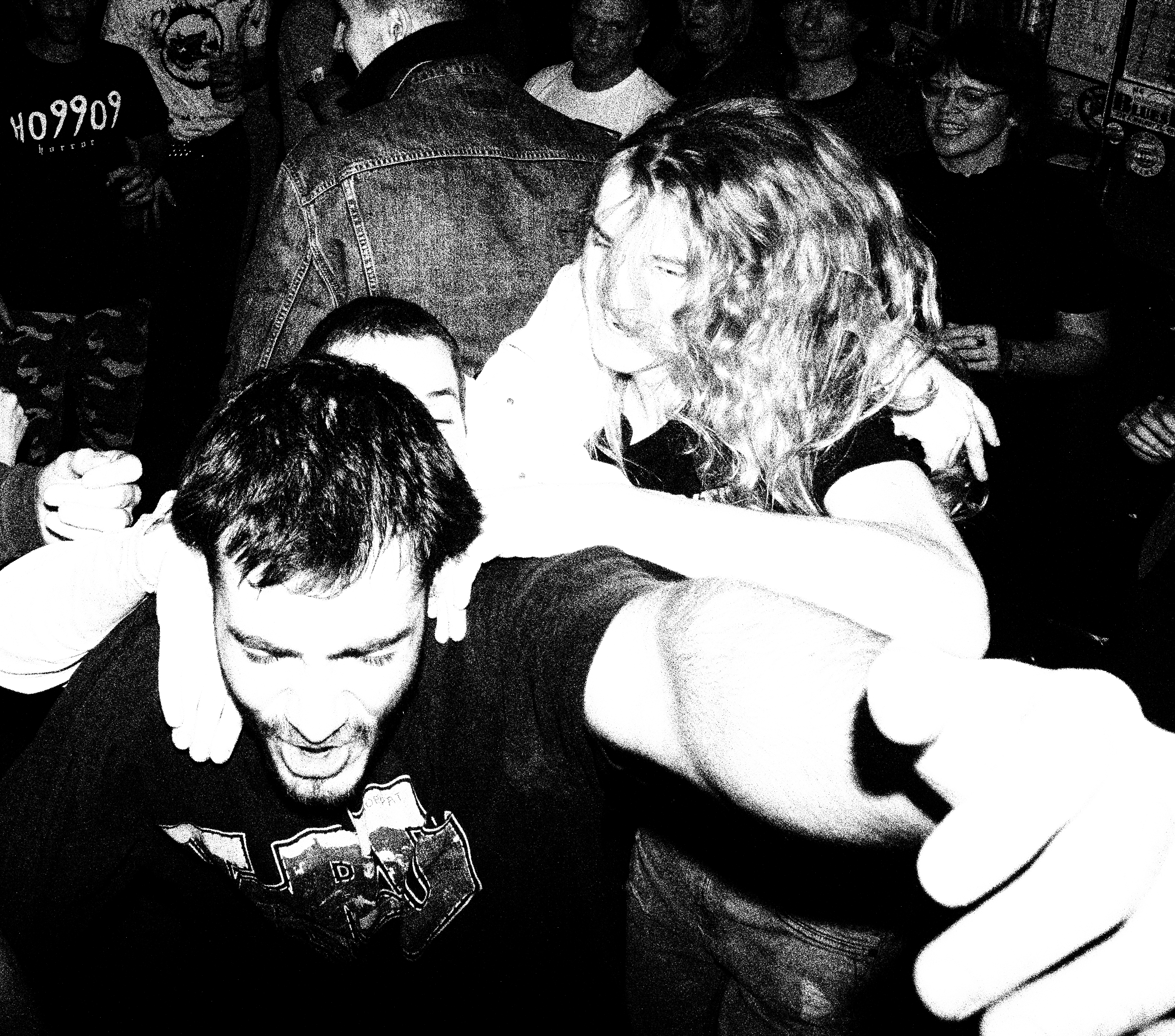
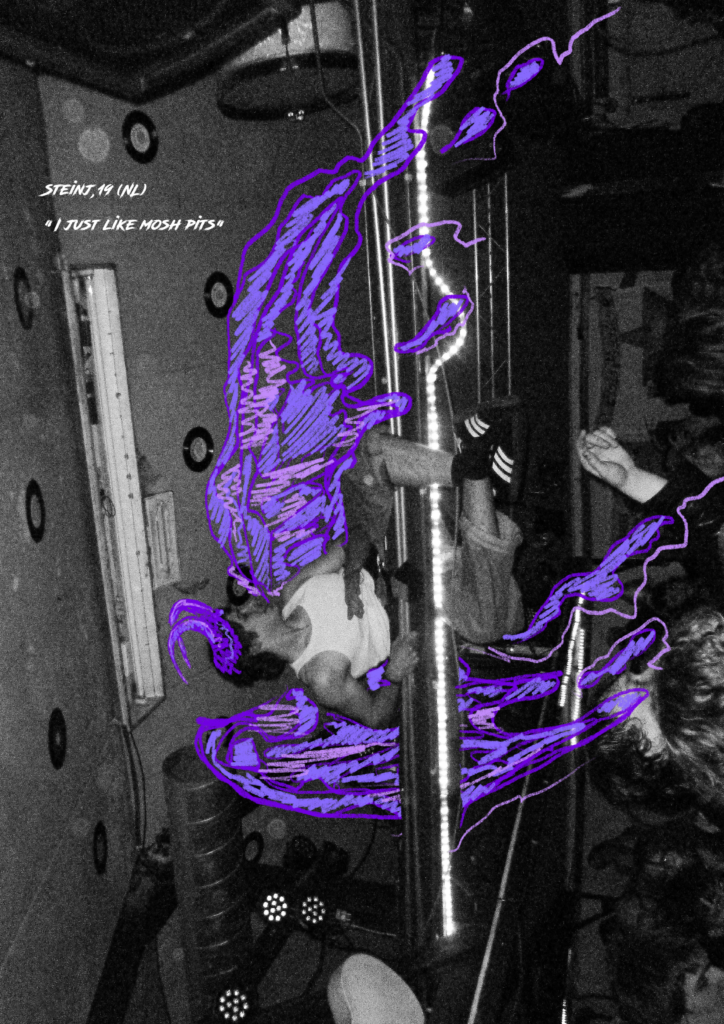
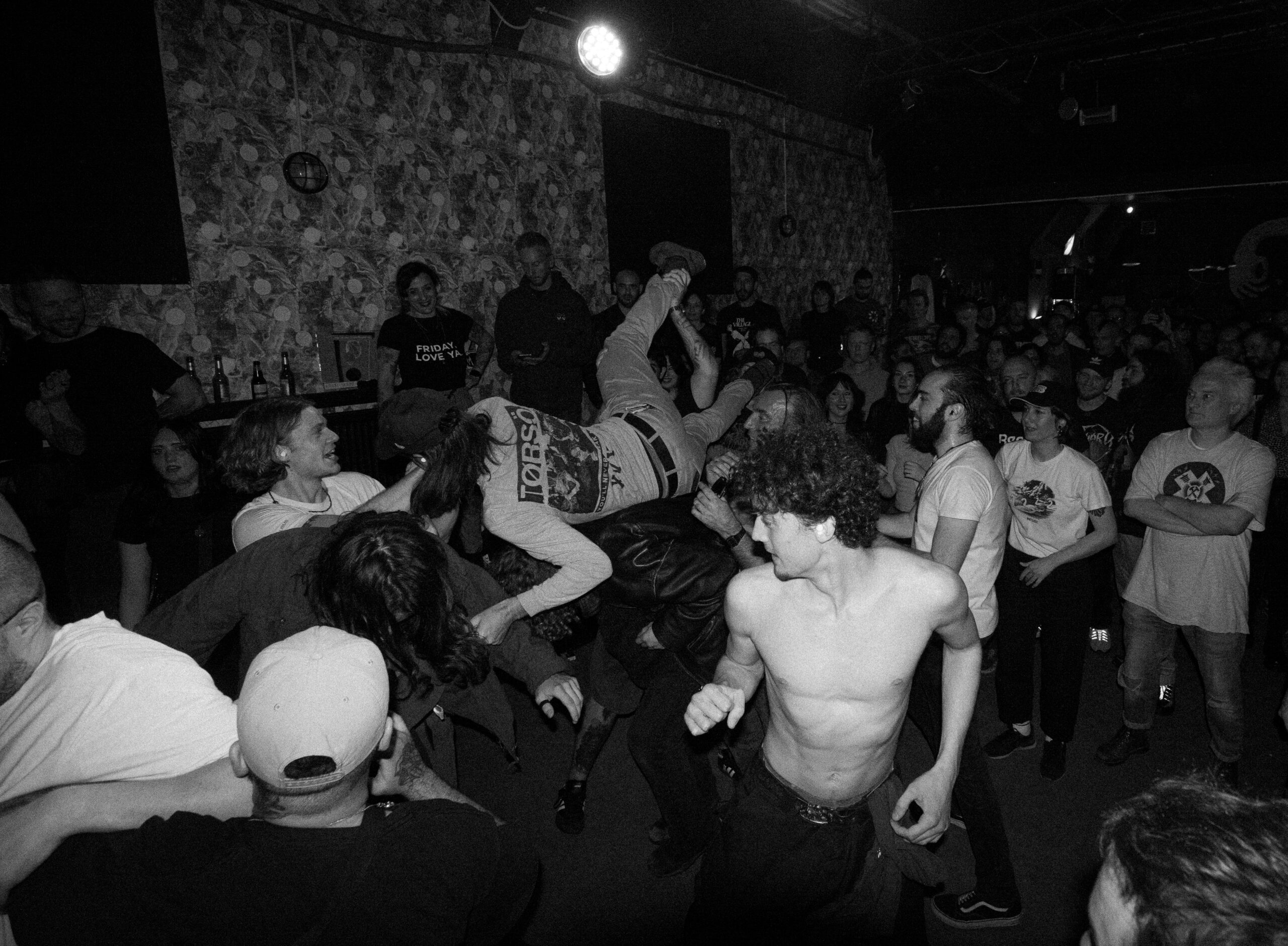
the first band mounts onto the stage and the crowd of people roar with excitement. One, two, three, four! Fast-paced, repetitive guitar riffs accompanied by the thunderous thumping of drums set the place alight, infecting the crowd with coordinated head bangs. The music bellows and with that, a handful of people rush into the mosh pit. And as the band plays and plays, the mosh turns into a vortex of flailing bodies.
ear drums are shattered with a message
DESTROY BABYLON!
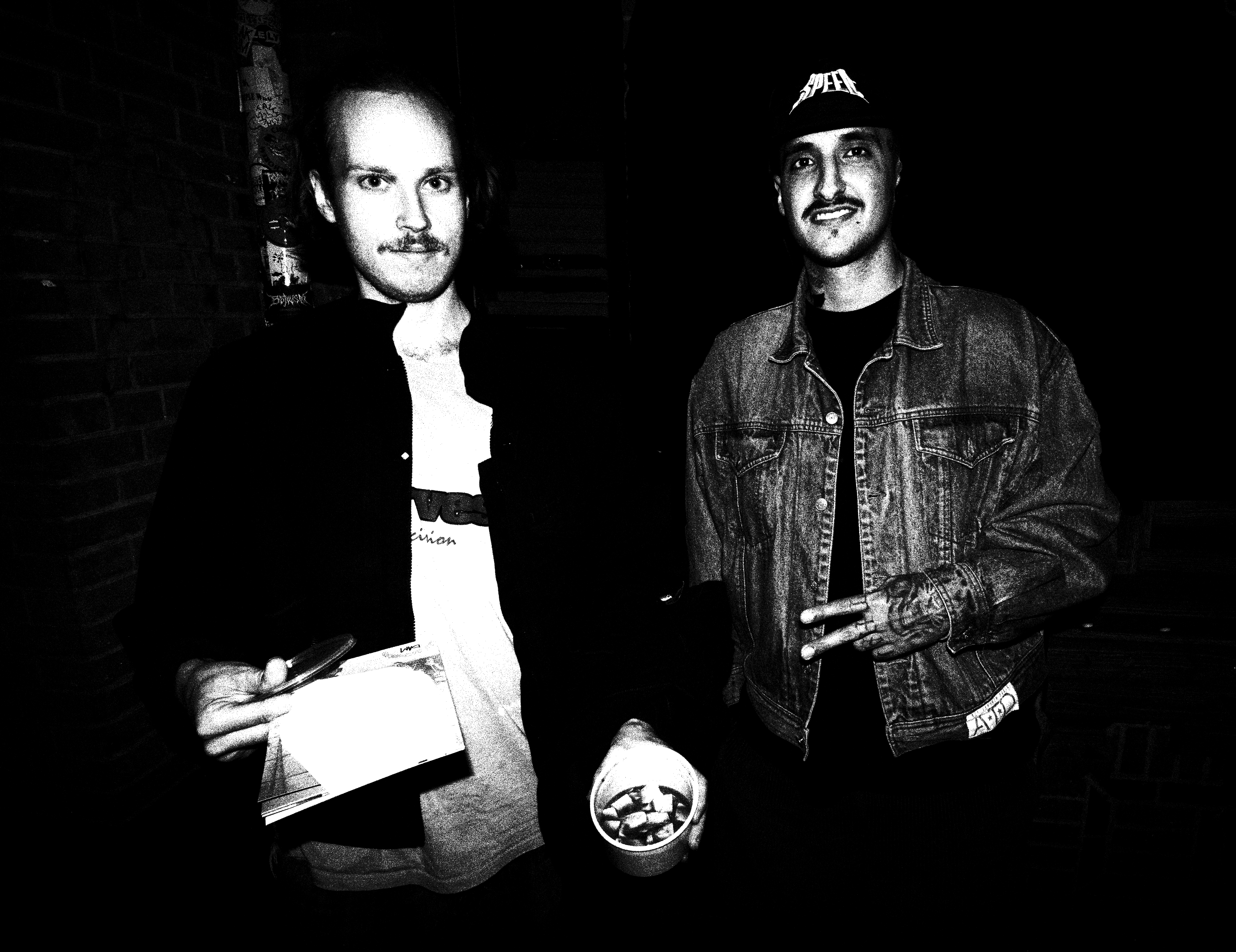
As the band quietens at the end of the final song, the punkers stream outside for a chat and a cigarette. We follow suit, in dire need of fresh air and conversations.
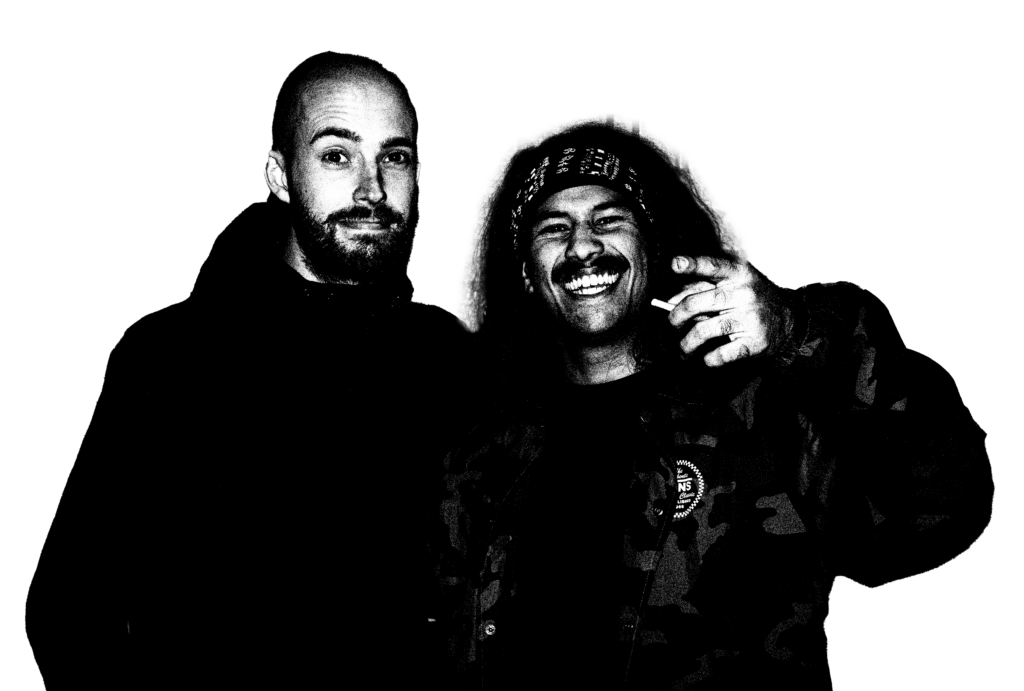
Who does punk attract?
The punk scene is always welcoming to people who say fuck you. (Stony Hawk)
Punk attracts a lot of teenagers at this moment. With other genres it’s different. You need to fit into more of a box, and with punk, there is no box. That’s what we all need to learn. In punk we are quite far with that. We’re not perfect! But we’re saying it out loud. This is a big step. So yeah that’s why it’s growing, so hell yeah. Let it grow for 100 years. (Stony Hawk)
I feel like it’s a very organic thing. You will be there if you really connect to it. It’s not like you’re trying to grab people that are not into it. People will come here if they like it, they will come back if they connect to it. (Little Hayden)
Punk is more of a safe space for everyone that isn’t Picture Perfect. (Maloe Melo)
It triggers a kind of counterculture where it amplifies the noise there is among the community. (M&M)
Guys, the next band is starting!
Unfinished cigarettes drop to the ground, sizzling on the rain-soaked pavement, marking the end of conversations. People swarm back inside, downing the last few drops of beer in preparation for another. The door opens and the noise of rebellion seeps into the street. And for a second, punk escapes the confines of the venue. The door closes behind us and with that the outside world dematerialises. The drums pound, the guitar hypnotises, the bass leads and the singer protests, the vortex of flailing bodies becoming unnervingly animated. More members of the crowd jump into the mosh pit. Arms swing, bodies fly, hair dances.
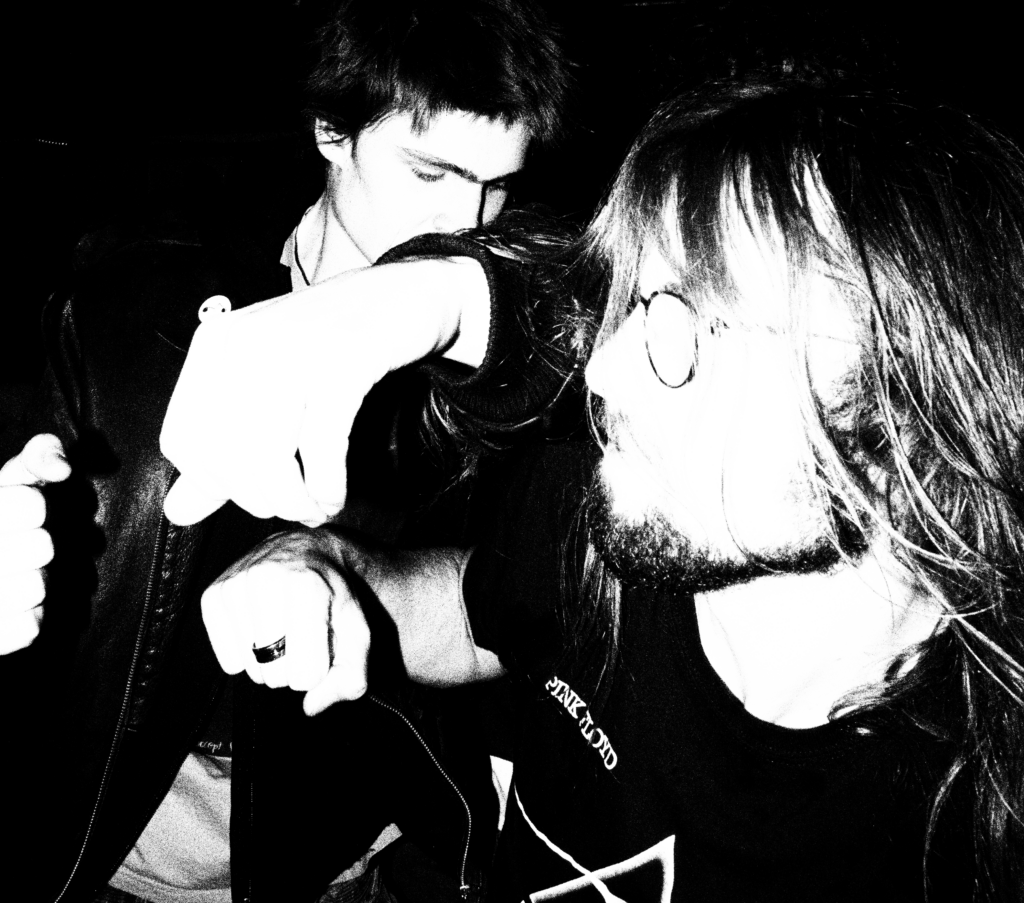
Amidst the swirling chaos, an unspoken camaraderie develops. Snap-shots of faces become familiar and through its tumultuous yet nurtur-ing nature, a unity forms and differences are dissolved.
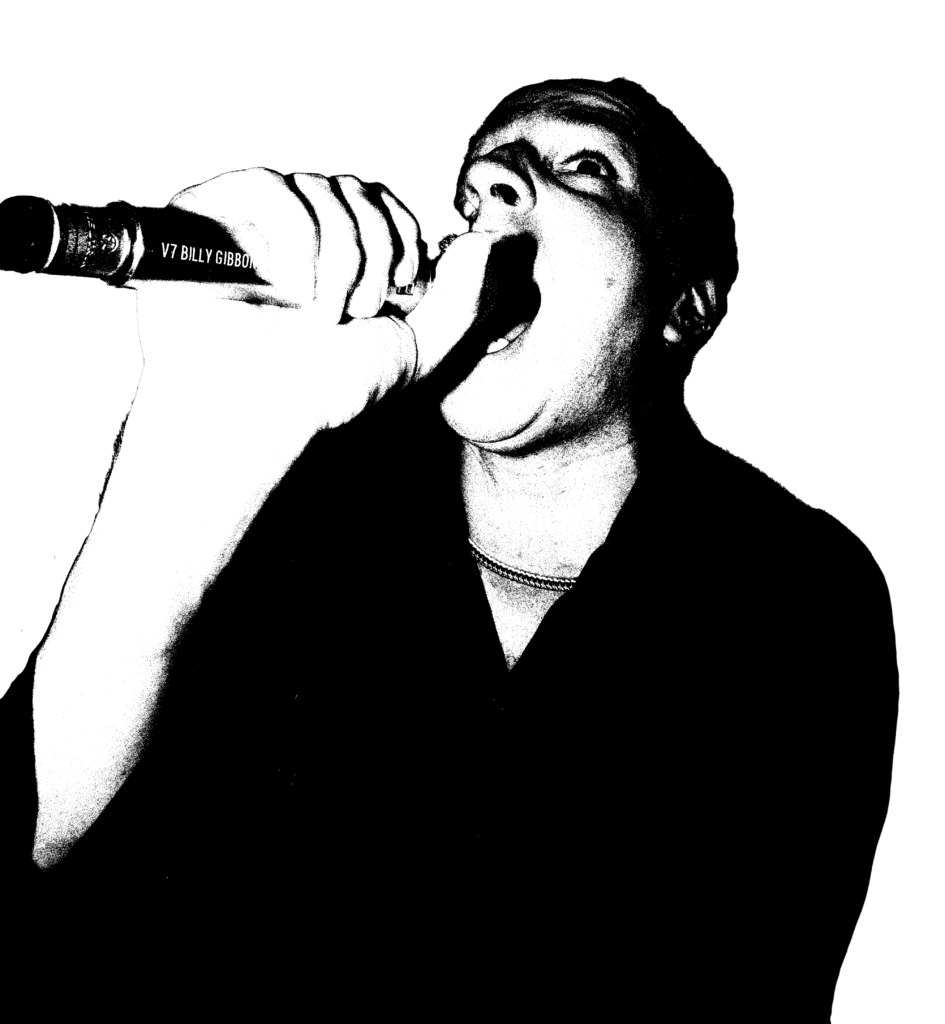
Why this sudden attraction?
I think there’s like a Passover of aggression that people have from covid, but they had no way to express themselves while sitting in a fucking 3 metre squared bedroom. We’re in a process in time where a lot of it is starting to reform after covid, the kids are getting into heavier music. (Little Hayden)
At the moment we’re in a polarisation, and that’s the moment we need punk and everywhere you see new teenagers, who didn’t grow up with it. We all have that fuck you mentality so it’s huge at the moment. Now the system is cracking again so it’s our chance dude. (Stony Hawk)
I think it (punk) never really passes because nothing can get perfect and there will always be such problems that affect communities that can express themselves in this kind of scene. (Helena and Kirra)
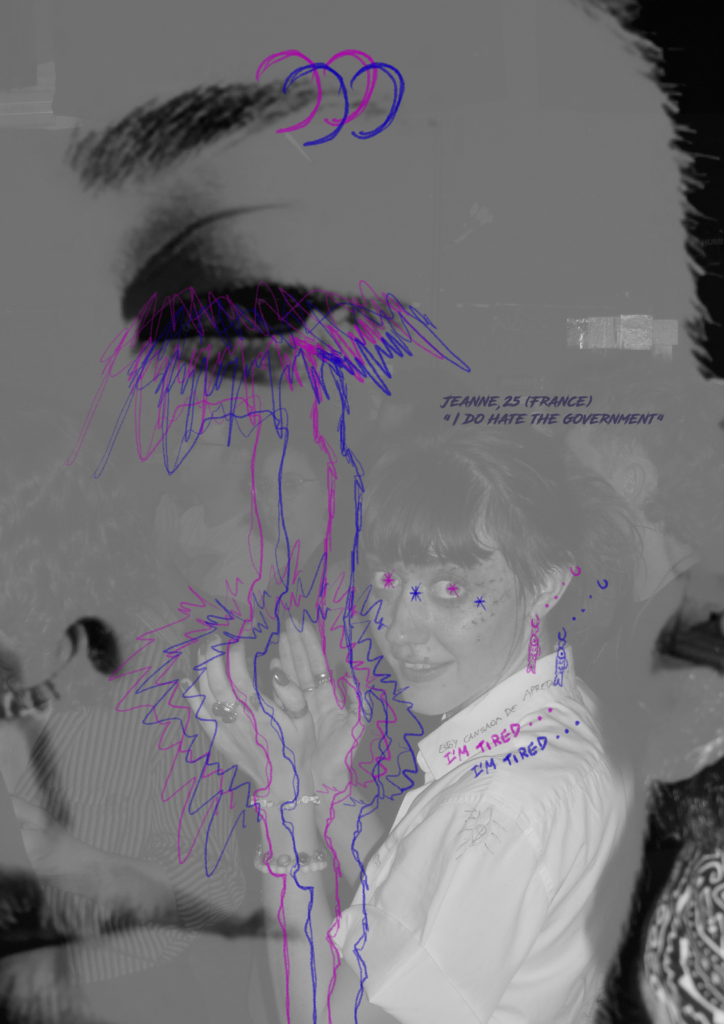
Punk never dies. It’s more question-like. It also has its roots in political things, and a lot of youth is just fed up with how the government is running things currently, especially after the corona crisis, we all had to stay indoors and stuff, everybody just wants to let loose. I think that’s the voice. (m&m)
The final act of the evening is about to start. People migrate from the dense clouds of cigarette smoke in the cold and damp Amsterdam street to the warm indoors for the third and final time. The last band occupies the stage, an altar for counterculture.
In the heart of the frenzied mosh pit, where bodies collide in a chaotic dance of rebellion, a sudden disruption shatters the chaos. A beer bottle, propelled by a fellow mosher in a punk trance, meets its demise against the unforgiving floor, the sharp crack piercing through the cramped venue. In an instant, the crowd dissipates while the band keeps playing. The culprit of the smashed beer bottle weaves his way to the bar and quickly returns with a broomstick, collecting the shards of glass that litter the floor. Some give him a helping hand, heads still banging to the harsh sound that continues to bellow out from the speakers.
Once all the glass is gathered, a torrent of people sporting mischievous grins cascades into the middle of the venue, and life springs into the mosh once again.
Little Hayden makes an appearance in the midst of the chaos before stepping back to the outskirts to observe, waiting to storm in once again.
There’s a term in hardcore, the “cool guy”. And the cool guy is the guy that is standing in the corner with his arms crossed and he couldn’t give a shit”.
Little Hayden is not a cool guy
Why is it youthful?
You have this thing where old guys won’t pass on info to young kids living here, so for many this (punk/hardcore) is something that the youth has to build up themselves. (Little Hayden)
It’s the rush of adrenaline.
I think it’s also not maybe anger. It’s definitely part of it but a lot of people are looking for some sort of community. (Little Hayden)
—Some recommendations from Little Hayden—
There’s a lot of stuff on YouTube. That’s what I always drop on this shit too. It’s a bit funny. I like dropping knowledge in this sense because this is kind of what I’m doing with my own thing, trying to connect with the young crowds, because there isn’t a lot at these shows. But for moshing, anybody at home, just watch the “Irate vendetta” music video. Or watch “everybody gets hurt” -goon squad. Any of the 90s New York shit is fucked. Also 90s Japan. If you watch videos of bands from Japan like 43 urban, kids go crazy. Like stuff you’ll never see.
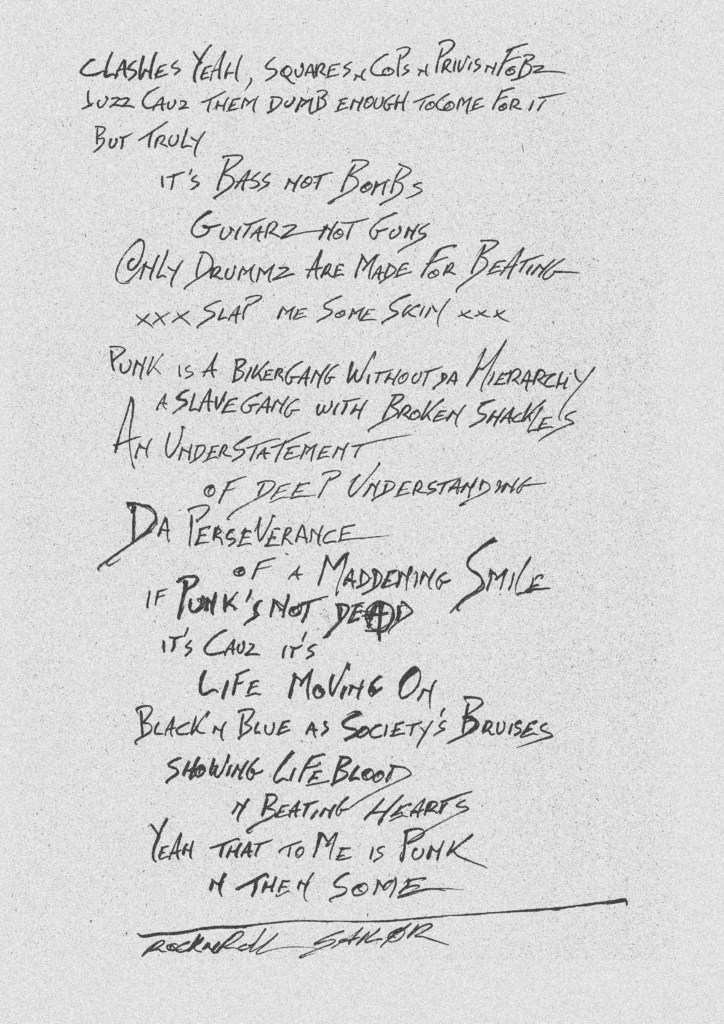
Noises of A grumpy old Man
PLEASER PUNK
Punk was fully emerging in 1977. I remember two German punk girls sitting on the steps to the entrance of Paradiso in the afternoon. They had all deep black clothes, black Dr. Mar-tens shoes and a high, black mohawk. Surely took some guts to be that punky in Germany.Punk pretended to be rebellion. Rebellion against the establishment, against the lethargic hippies and the long winding prog-rock. Where a lot of things were going slow & quiet in the seventies, punk was fast, loud, sneering, spitting and dirty. Shit piling up in the toilets – some punks in Amsterdam got scabies from all that dirt.
– Hey, you don’t look punk, you don’t sound punk, you don’t act punk. Why do you call yourself punk?
– Oh well… It’s a state of mind.
The so-called rebellion in Mokum, as I observed it in those days, resulted in a lot of shouting, fighting and destroying, fueled by speed and heroin addictions. New Wave took over, no more senseless violence plus stylish music. Still punk remained, although on a much smaller scale. To this day there are neo- punks and venues for punk-rock concerts. Some claim that only at punk live shows, complete with mosh-pits, the true punk spirit can be experienced. Besides the hardcore punks, fashionable types also adopted punk. One girl in Het Parool called her style ‘pleaser-punk’; – the opposite of what punk ever stood for.
Punk you, Iceburnner
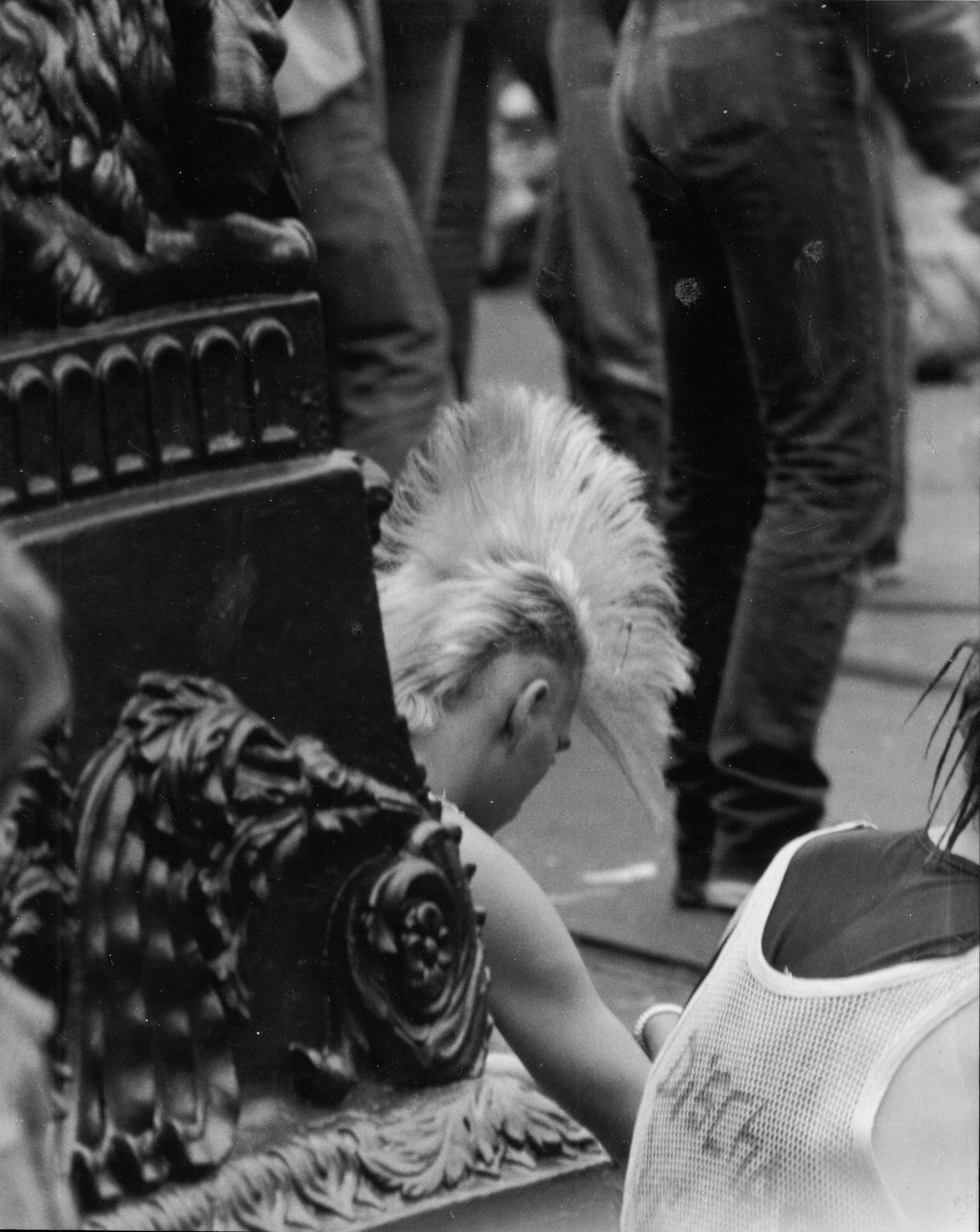
Photo by Iceburner
Amsterdam 1989
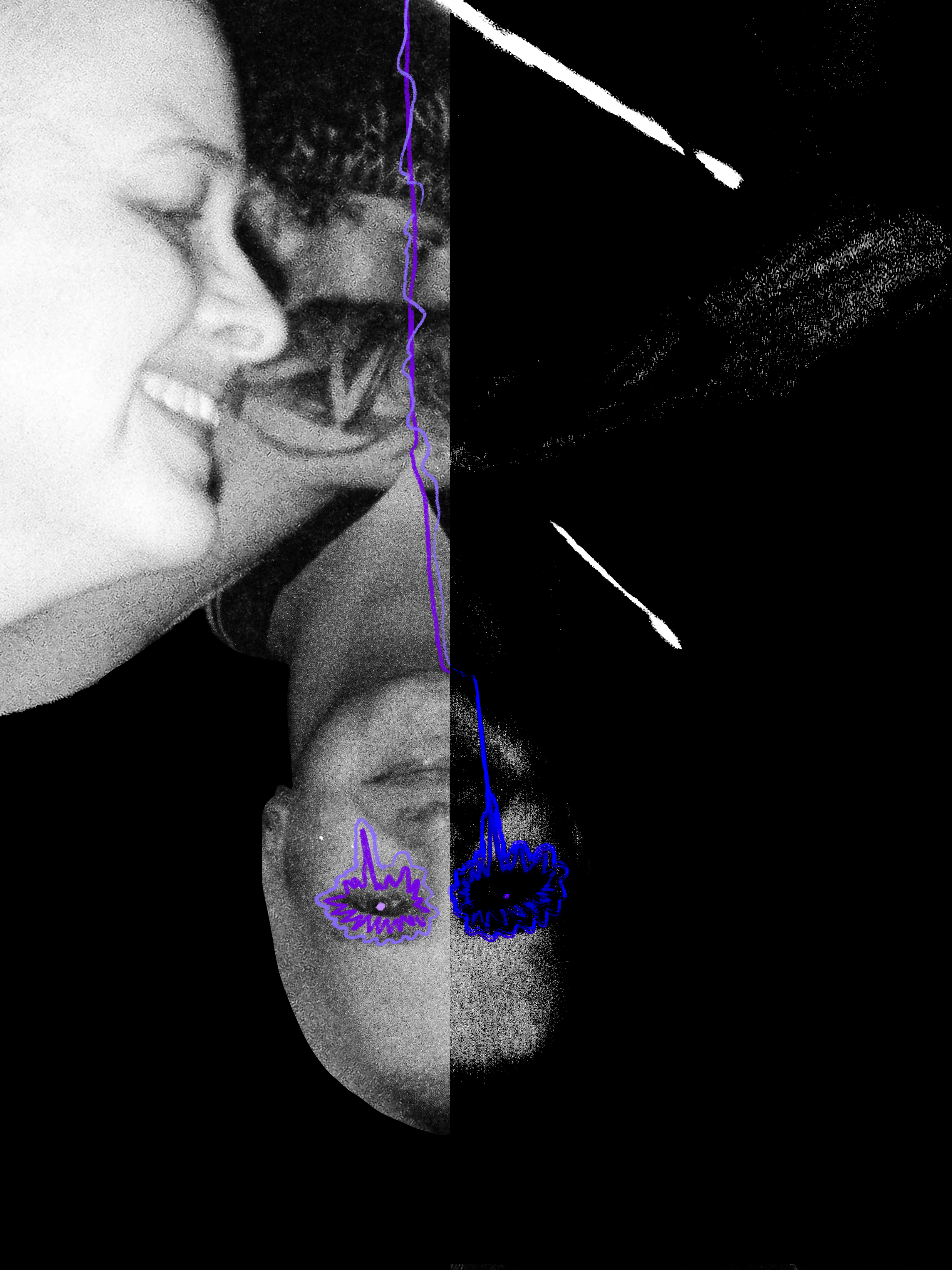
Photo by Karmen Barrera
A COWBOY, DOG, OR A FUCKING POLITICIAN
Written by NICOLAS AANONSEN
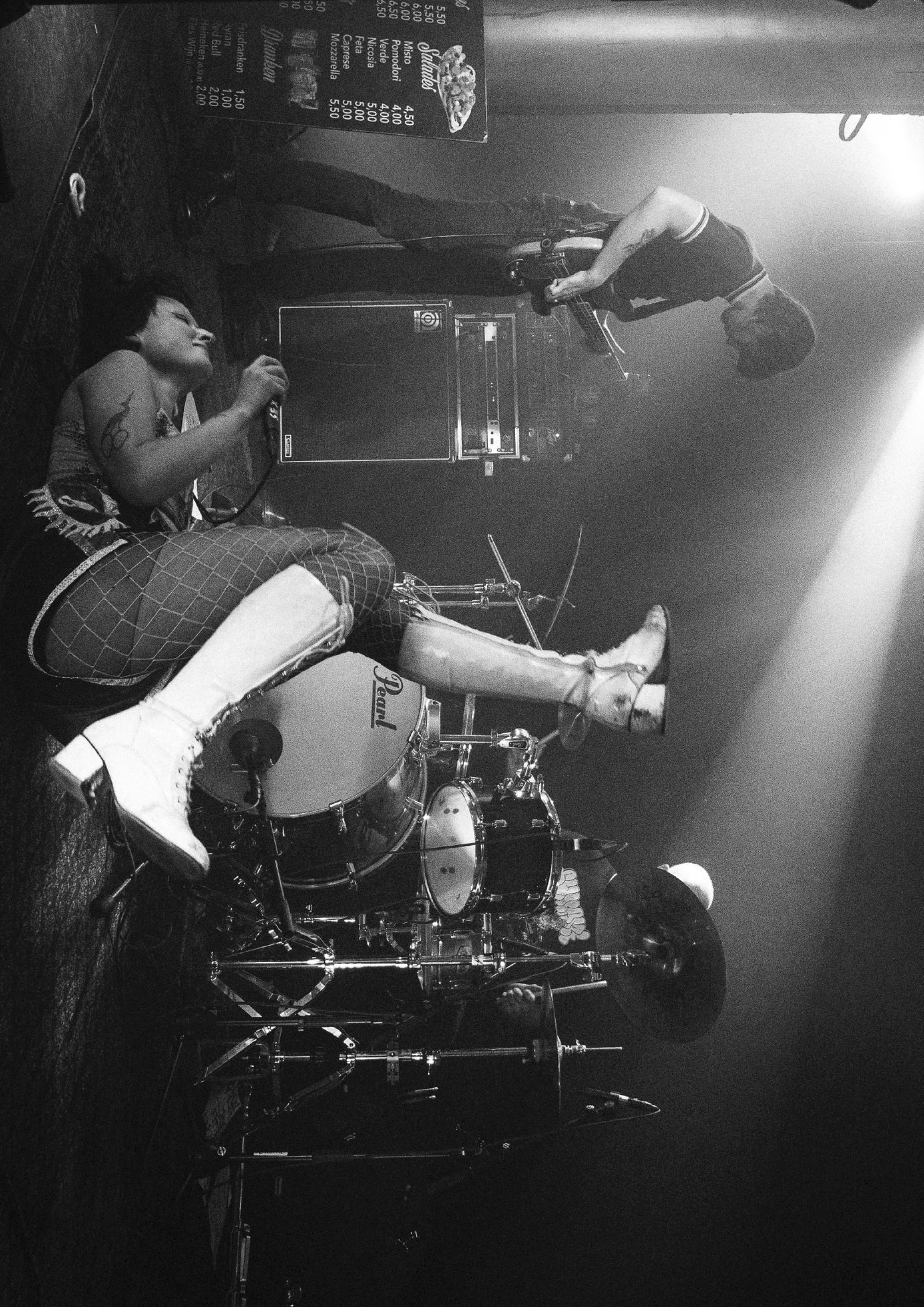
Ever since going to Snackbar’s gig at OCCII, and watching Fleur perform live, there has never been a doubt in my mind that Amsterdam punk is alive. I was blown away by their stage pres-ence. In an all blue skin-tight tracksuit raged Fleur in the middle of the audience. It went against many of my presuppositions, and evoked an elephant birth of interest. The idea of focusing an issue on local punk for a magazine that was barely more than a few conversa-tions and walks at that point of time, became an inevitable future. I have been increasingly growing into punk ever since, seeing more shows, finding more bands, playing more pool at the Minds… The months leading up to Issue#2 made that a regular. Nevertheless I am still convinced I have never experienced something as spectacular as that night at OCCII. With their long-awaited debut album dropping February 23rd, Snackbar is about to stir the whole scene up.
Having just dyed her hair blond, I mentioned the color after ordering coffee and wine. “I hate it!” Fleur says. In good spirits we start the interview.
Before ever playing in a band, how did you get into listening to punk?
I think it was because of my parents. I grew up in a household with quite some heavy music, like rock and punk. I was seventeen, eighteen when I really got into the scene. When I started playing it I began to like it more and more, it became more like some kind of obsession for me.
Your songs often have humorous and ironic lyrics, has it been like this from the start?
Yeah, I think it has a lot of Amsterdam slang, with humor, kind of very flat humor. And it’s a bit childish. And for me, some-thing that I really don’t want is for it to be a political punk band that sings over and over about political stuff, or really hates men. Which is also completely fine, of course, it’s also really important that that kind of music exists. We also write quite aggressively, but it’s not really like ‘anger’ anger. Like every-thing sucks and everything is shit and oh
fuck the politicians, fuck this fuck that. There is more of a sweet, childish, humorous, thick layer on top of it. For me, humor is really important in my music, but also in the work I make. It’s a way of coping. I use it to cope with certain problems.
I also use a lot of children’s TV programs and characters to tell a story within the modern world. I like to use things from my childhood and combine it with prob-lems within this world. I guess some-times when you listen to important lyrics it can also be really funny. I like that fine line in lyrics and in arts in general. It’s also a release of a certain emotion.
Its fun how contrasting it is from what punk seems like from the outside.
It’s like a harsh joke, you know. A harsh joke can be funny, but it can also be hurtful. A song can be funny, but if you think longer about it can be like ‘agh’, because it can be true.
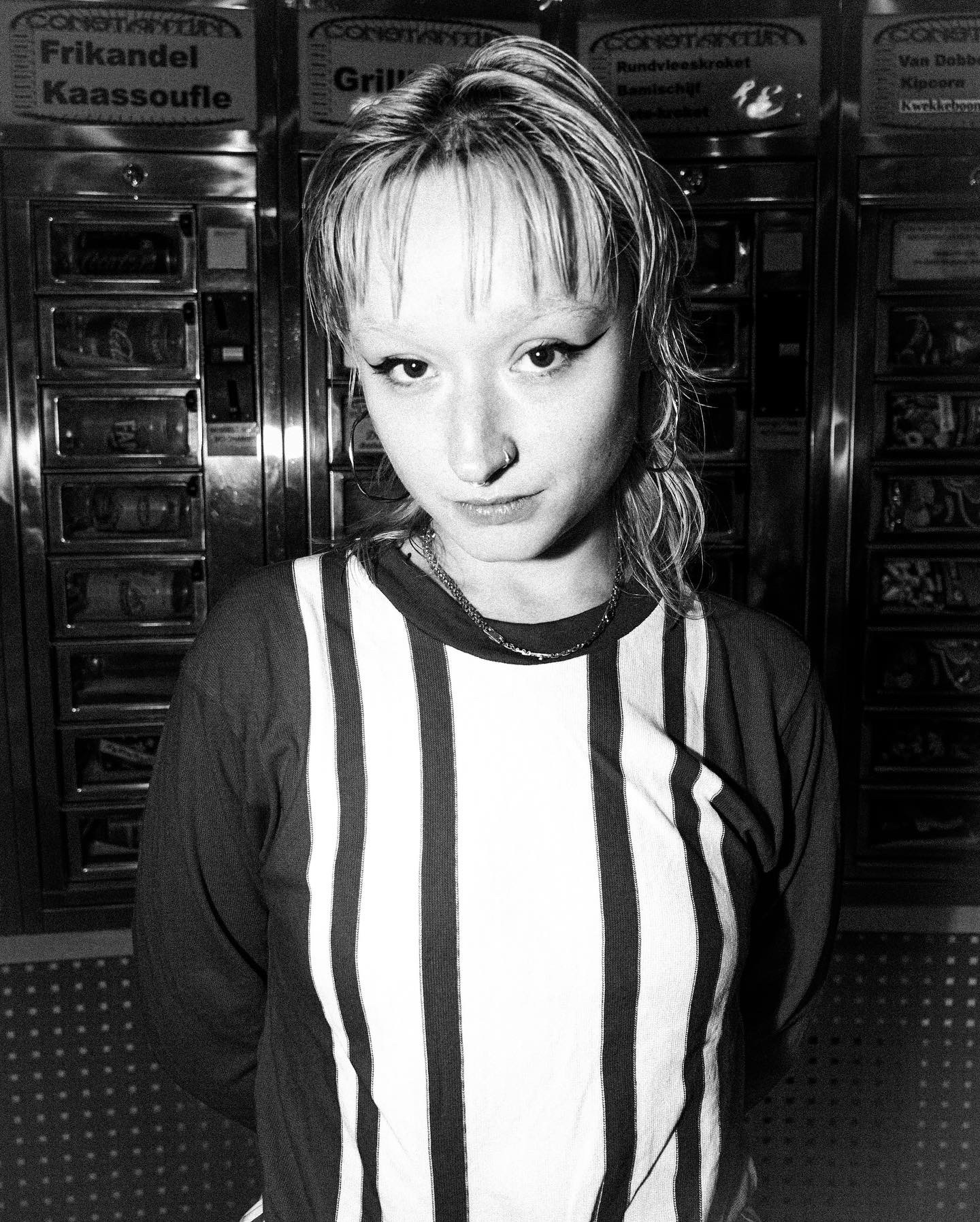
Photo by An Smid
Are you consciously challenging stereotypes by doing so?
Yes, of course. There is this bar I used to go to a lot, but I would always have fights with men there. The most ridicu-lous ass shit has been said there. Mansplaining dudes, really mean, and then you get drunk and get into a fight with them. It is framed as this punk bar with open minded stereotypical crusty punks. But they aren’t.
What do I have to say about these men? I wrote a song about it- It’s called ‘Men in the Minds’, and it’s about all the shit they have said to me in a funny storyline.
That is definitely a stereotype I make fun of.
I’m glad to see how punk has moved away from being a male dominated genre.
If I look at other women that are in bands I find that’s inspiring. It’s always like as a female, if you have rage or you’re angry, it’s always like, Oh my God, someone is too emotional, or there’s always a kind of negative flavor to it. And punk is in general quite aggressive. So as a woman, you can finally have this female rage, and no one says anything about it.You have freedom of expression. And that’s something that I find really inspiring and important.
On stage the boundary of what you can do and what you can´t is really vague and thin. You can do whatever the fuck you want.
There is like a thinner border between the stage and the audience, especially with punk.
remember the Snackbar concert I went to, you came down from stage and screamed in my face actually.
It’s like it’s really important to grab that space and make it yours, you know. No one is going to tell you what to do when you’re on stage. You are the performer, you have to make a show out of it. How you do that is totally up to you, but I like to play around with that and make fun and be quite aggressive. I make a game out of it I think.
Do you think there is a connection between your stage presence, and your music and lyrics?
Yeah, I think it’s quite cheeky. Every-thing that we do: the music in itself, the instrumental is quite cheeky, the lyrics are quite cheeky. I think on stage we’re quite cheeky. Having this close contact with the audience, twerking, dancing, kind of like slutty behavior.
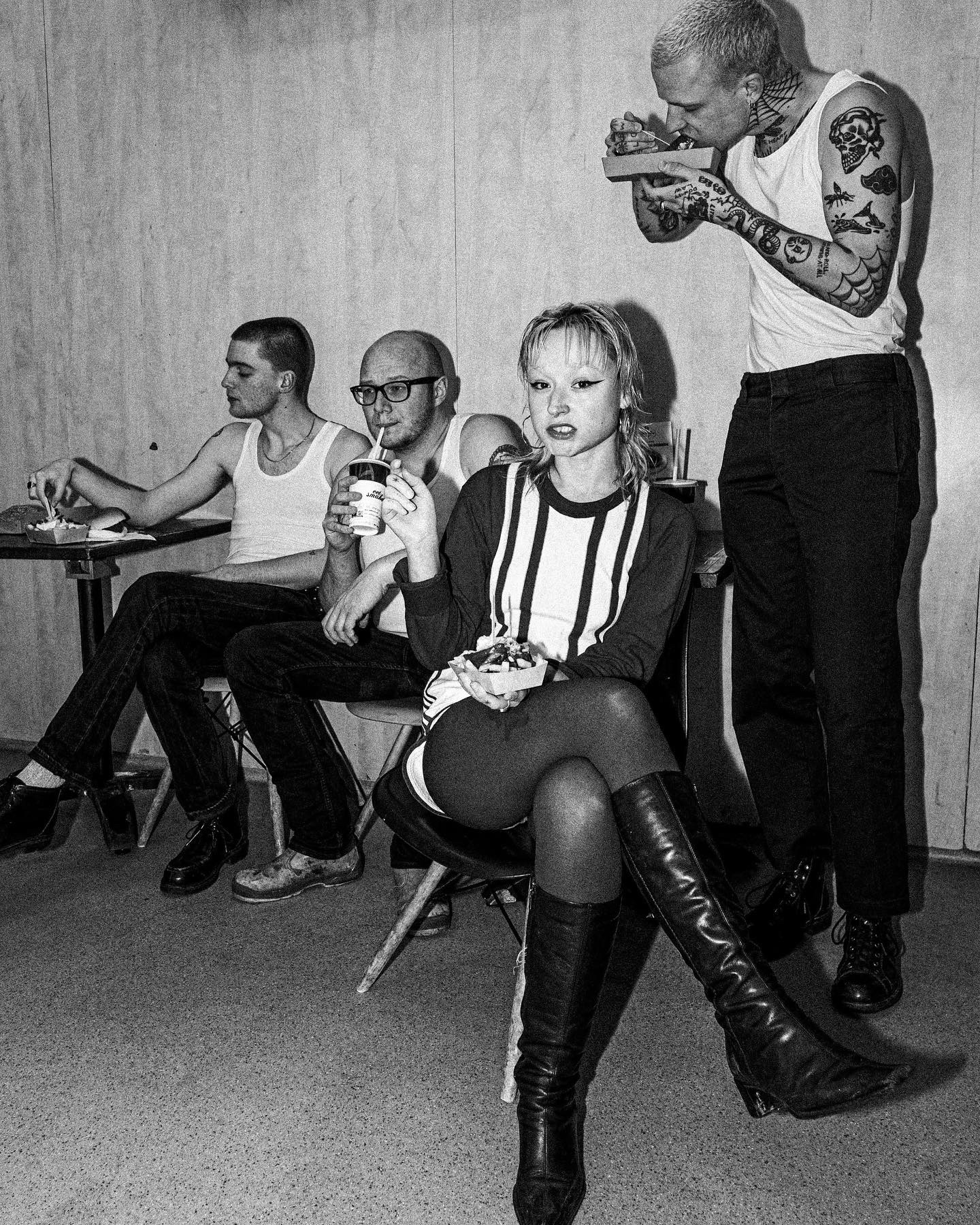
Photo by An Smid
What about that group of guys you told me about last time, what’s the story there again?
Oh yeah hahah. They were being disrespect-ful, and touching our instruments. Like they think they are so fucking important. But I’m here because I want to do it. If you don’t want to be here just leave. but if you act like this and stay, I’m also going to make fun of you, like you make fun of me. So then it becomes a game, you know? But not that I take it like, so, so heavy hearted or some-thing.
I just see it as you’re like, like a fucking marionette right now of my game and I can kind of, like, play on that and you become part of my show, you know, it’s fine. hahah I can use you for my stage presence, so let’s go. You ask for it. And then at the end they were dancing, so that was actually quite funny.
I want to go back to the message you’re conveying. What are a few main things that you want to stand for as a band or as a vocalist.
I think that I just really want to be myself. But I also feel it’s important to take up space and also say what I feel is important about subjects that I think matter, especial-ly about women, gentrification…
We have this western aesthetic. It’s sort of like a hubristic take. our lyrics are also something about, Western themes, all things I think we all like really inspired the seventies..
Patti Smith?
Yeah, for sure, yeah. The Runaways, Amy on the Sniffers and like really big bands right now, surfbort and other female fronted bands.
What about from Amsterdam, or the Netherlands?
LA.sagne is a really good band. Yodel Queen is a band that I really like, and Periot is also a really good band.
I think the Dutch punk scene is in general really good. It’s coming up again, a lot of young people are also in punk bands and it’s like a young scene. It’s for young and old, and that’s something that I find also really inspiring. Like if you go to the gig, like there are people from 40/50, but there are also people from around 16 and maybe even younger.
What advice do you have for bands that just started out?
Be yourself and don’t compare yourself to others. It’s your music, it will never be from someone else. Even if it’s just about a cowboy or a fucking dog, or a politician, or the color red. I don’t care, it’s your own music.
You got to own your own perspective. You actually have to believe in whatever you bring out. And I also think that you can’t just take it too seriously. It’s always good to be ambitious. Remember to take a step back and enjoy the process and kind of like start from scratch and just fuck around and play at shit venues where you don’t get paid, at discusting venues with puke on the ground. Don’t be busy with what is coming, be busy with what you want to make, and where you are right now.
I have to remember to tell myself that sometimes.
How are you punk?
By Karmen Vera Barrera
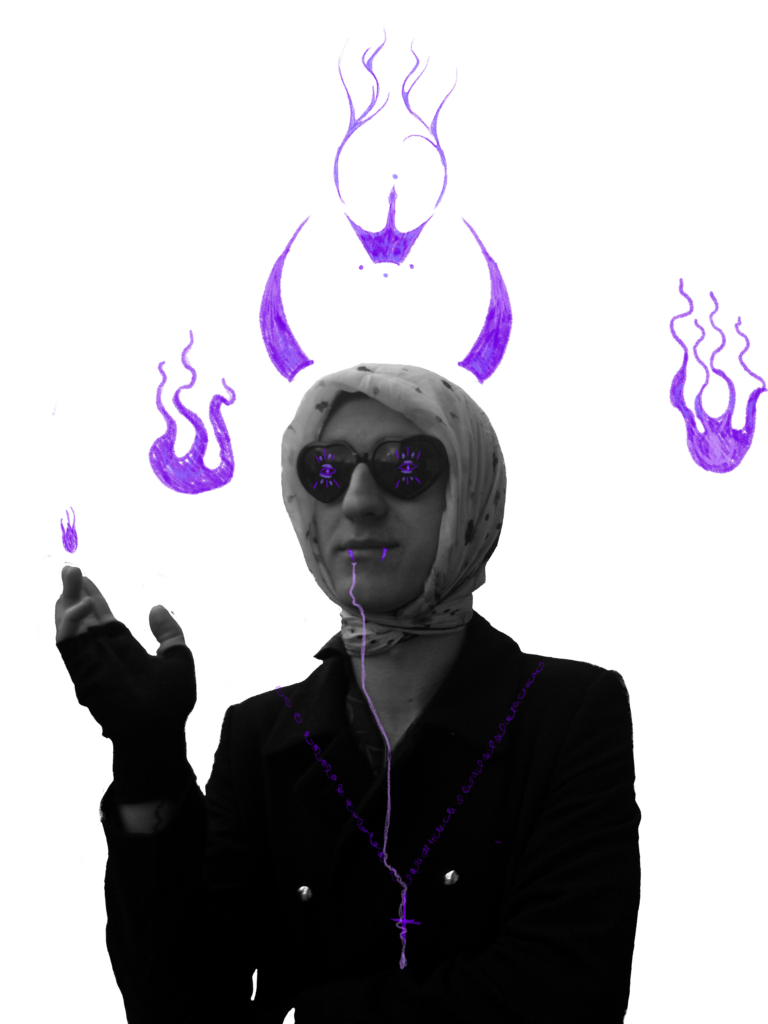
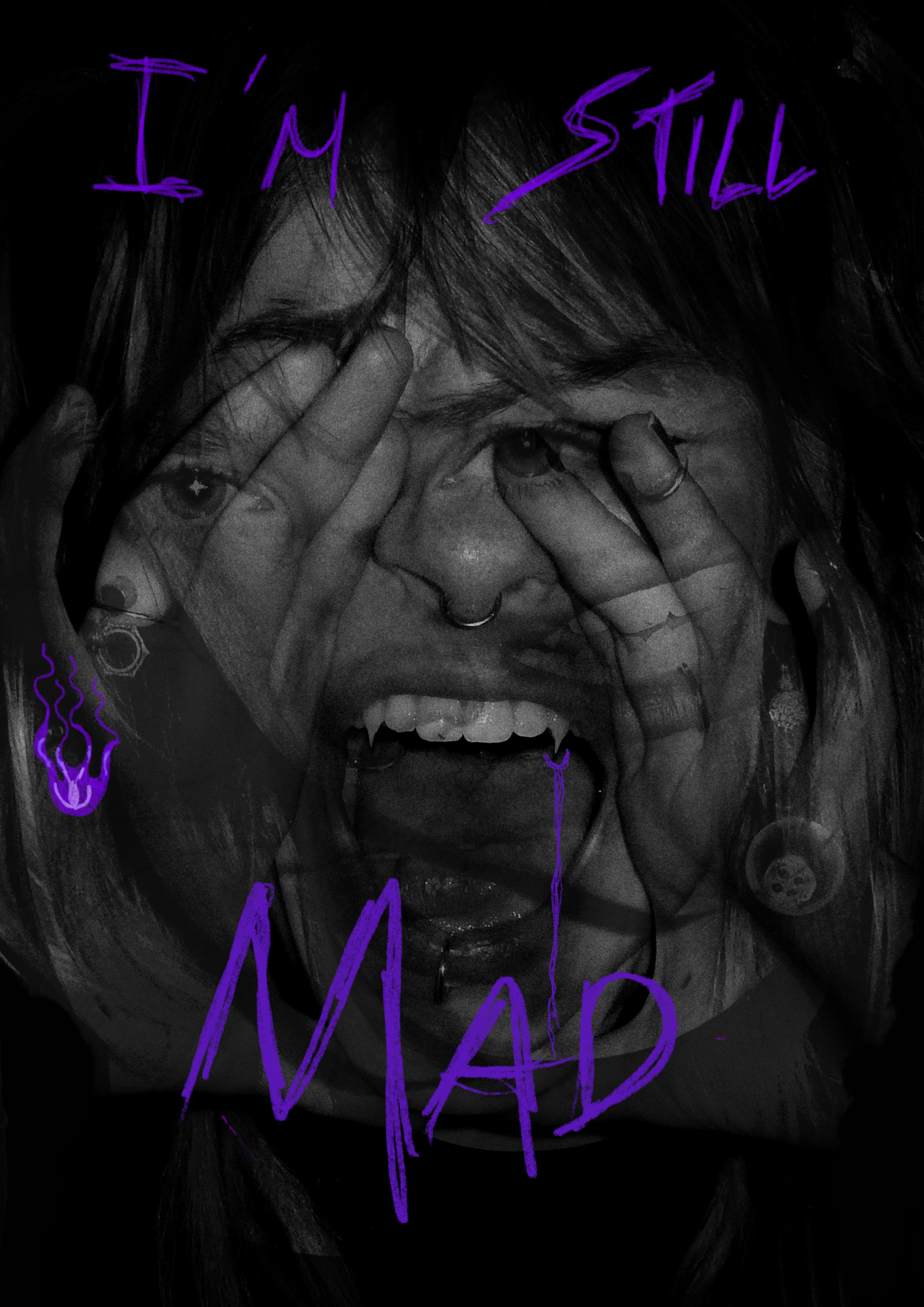
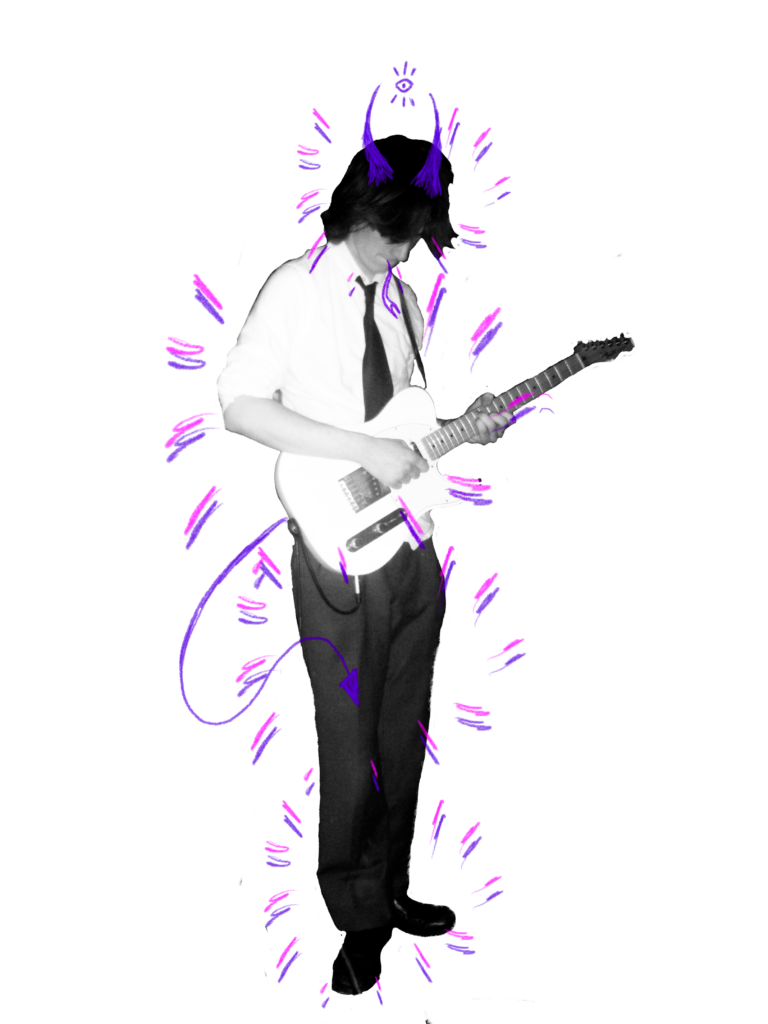
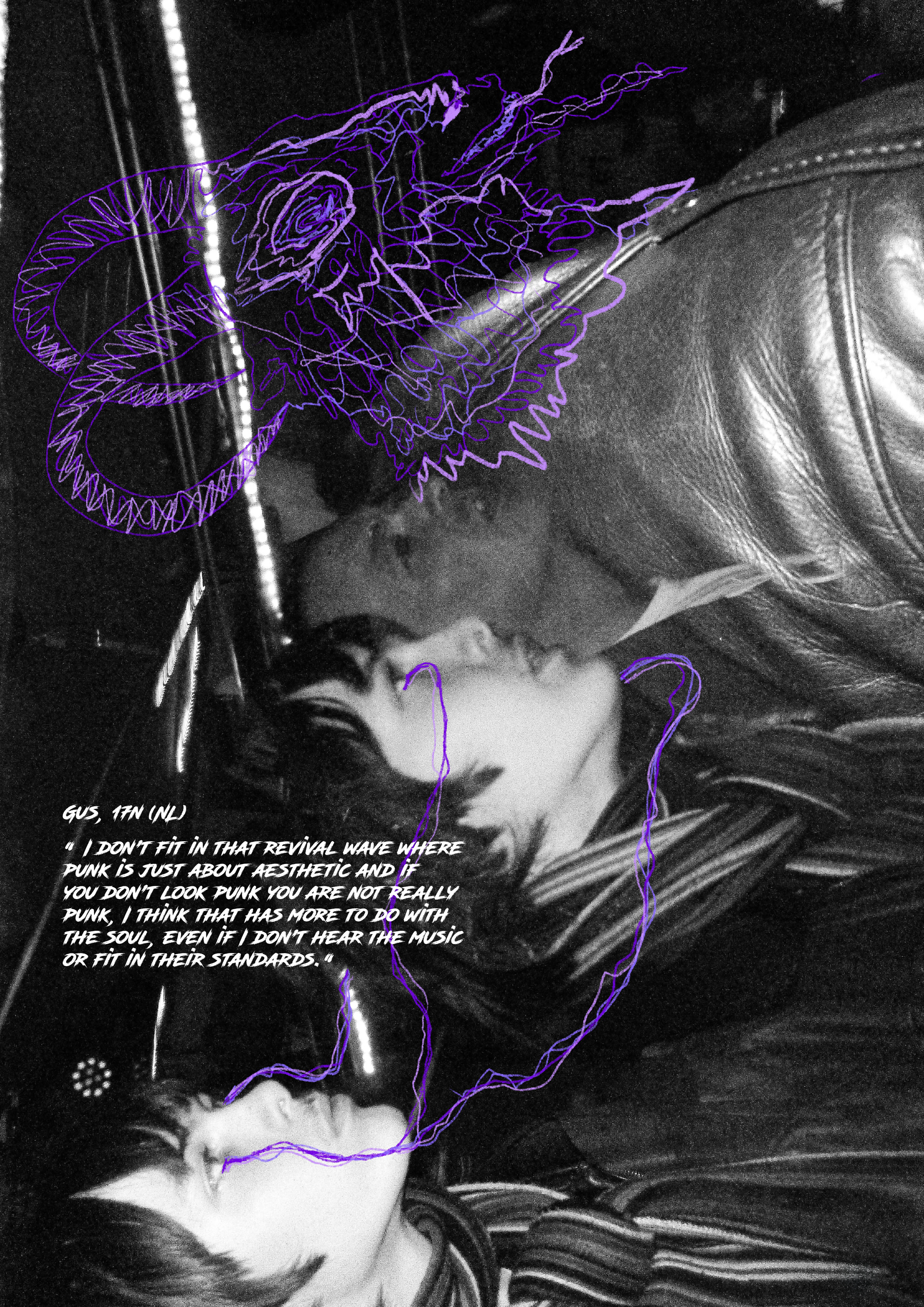
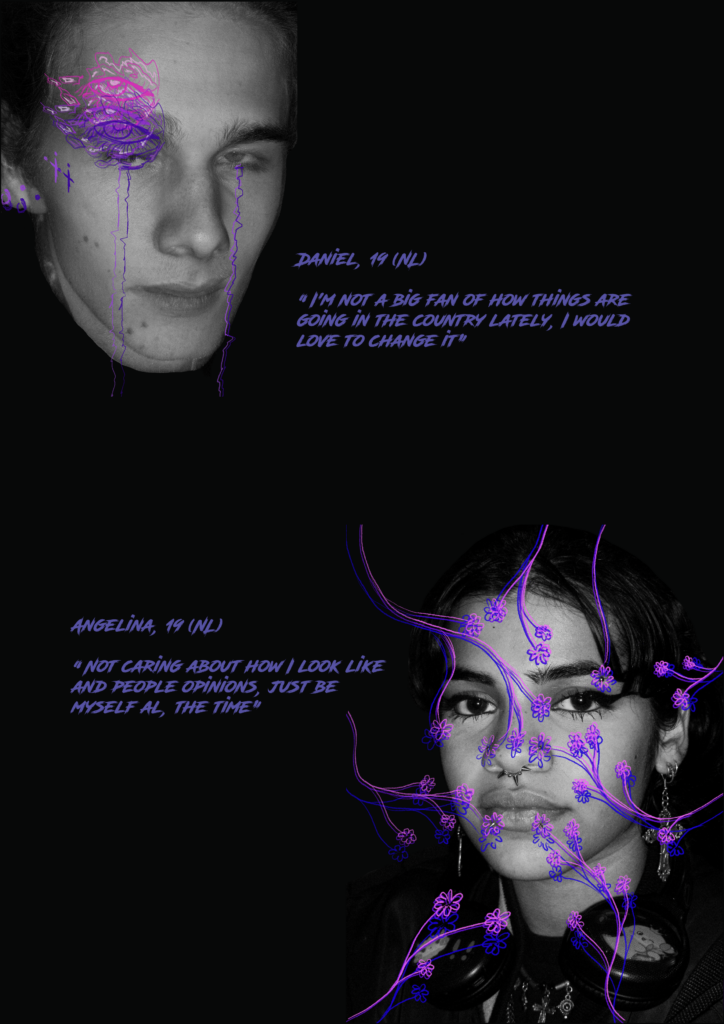
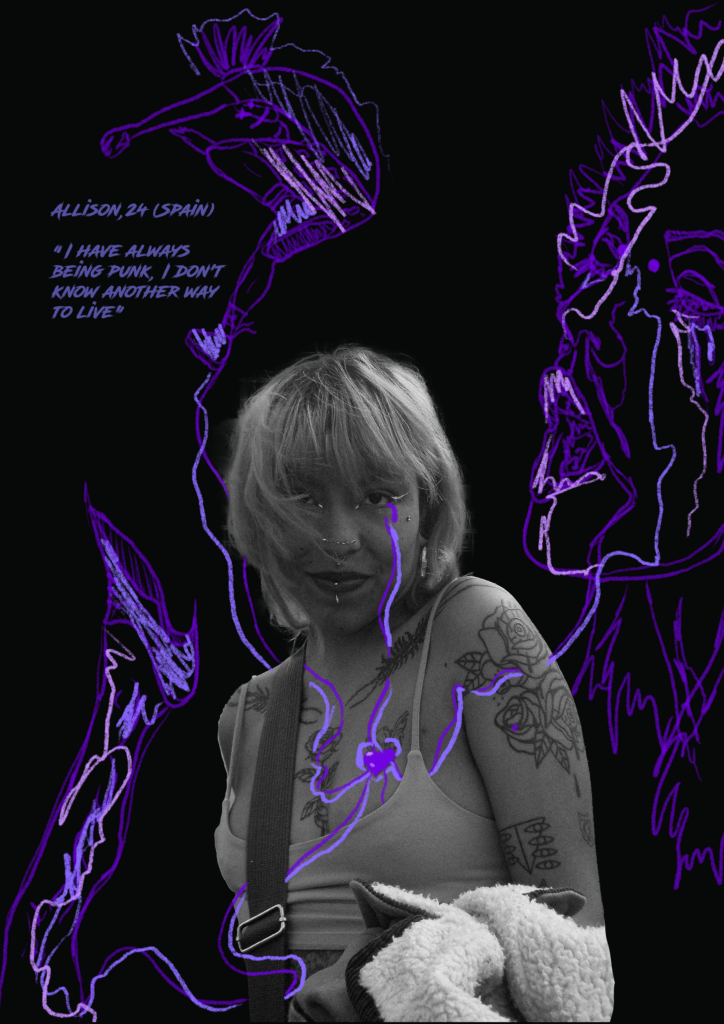
Throughout the journey of creating this article I discovered how diiluted the term punk is in our generation. It’s a mix between leftist political iideas with the sense of 70s fashion mixed with trap, guitar riffs and angry voices in a dark concert. I saw it in the eyes of a young girl from South America that had nothing to do with the aesthetic aspect, but whose soul shone like the fire of a protest while she spoke with a candiid voice. I saw it in a lady that looked at me awkwardly during a concert but that posed with dignity in front of me. Punk is for sure not dead, but it’s also not alive in the same way as it was in the past.
The needs changed through generations taking other shapes under tartan skirts and heavy make up but also through joi-ints and incense in a yellow living room.
Everyone has different ways to be punk and all of them are wrong and right at the same time.
So now I’m asking you
How are you punk?
Octopus Band (NL)
We wouldn’t necessarily classify ourselves as punk but we take a lot of inspiration from the music and the attitude. When we write music we just take the idea and develop it for what it is, not bounding it to a certain genre. For us authenticity is one of the most important things in music. I guess you could say this urge for authenticity and the refusal to con-form our music is in line with punk Ideology.
The needs changed through generations taking other shapes under tartan skirts and heavy make up but also through joi-ints and incense in a yellow living room.
Everyone has different ways to be punk and all of them are wrong and right at the same time.
Director Nicolas Aanonsen
Managing Editor Renzy Mauldin Young
Graphic Designer Hiba Ghilassi
Writers Leo Smith, Matei Lacatus Kees ‘Iceburnner’ IJsbrandy, Rock N Roll Sailor, Nicolas Aanonsen
Photographers Vali Stan, Karmen Barrera
Event Planner Aino Zohar
Website Creator Sander Troost
Sound Engineer Ionut Chiscop